How does the fermentation process work in the silo?
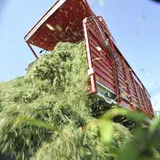
During ensyling, remove as much oxygen from the silo as possible. This can be achieved with a dry matter percentage of around thirty to fourty percent and sufficient weight.
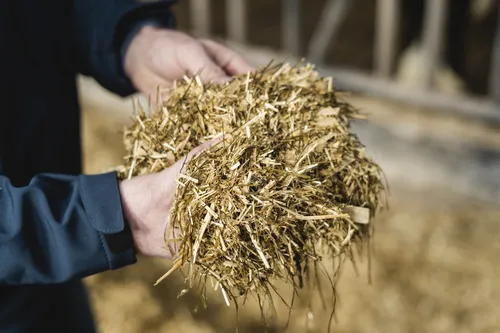
To complete the ensyling, cover the silo with agricultural film to start preservation. Apply an oxygen-proof film for this to ensure no more oxygen can enter the silo after covering.
After covering, the fermentation process begins with phase one, the aerobic stage, also known as the oxygen phase. This phase is essential to block oxygen-dependent fungi, yeasts and butyric bacteria from developing. Lactic acid bacteria are anaerobic organisms that thrive in low-oxygen environments. Additionally, sugars and carbohydrates become available for bacteria in this phase. Enzymes, among others, carry out this process.
Lactic acid and butyric acid bacteria are in competition with each other to ferment the sugars that are released. More lactic acid bacteria means the fewer chances butyric acid bacteria get to access these sugars. Lactic acid bacteria change sugars and carbohydrates into lactic acid. As a result, the pH of the silo decreases.
Due to the lower pH, the environment becomes more acidic and molds and yeasts cannot thrive. The pH finally settles at about 4.5 for grass and 4.0 for corn. The silo is stable, and all bacteria and enzymes are no longer active. The fermentation process is done.
The faster the previous phases have progressed, the more energy, and thus nutritional value, remains.
Upon opening, the silage surface of the silo comes into contact with oxygen. Molds and yeasts are activated once more. Acetic acid bacteria can slow down this process. Moreover, ensure a feeding rate of a minimum 1.5 meters per week for limited access and thus exposure of the silo to oxygen. The enzymes in the silo work similarly to those in the cow's rumen.
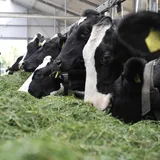
This boosts feed intake and results in more efficient milk production.
An effective fermentation process in the silo ensures both a happy farmer and cow.